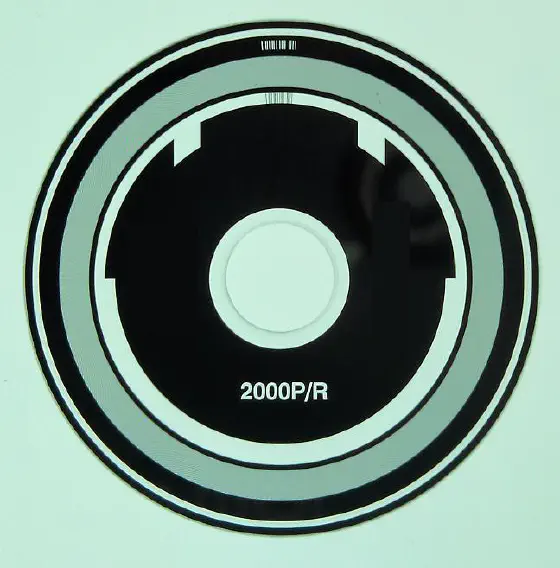
Transmissive · Cr on glass · Photolithography
Chrome-on-Glass Encoder Disc
A chrome-on-glass encoder disc is a transmissive code wheel whose opaque lines are a thin chrome (Cr) film on an optical glass substrate, patterned by photolithography and etching. The thin, dense chrome layer blocks light where the lines are and leaves clean, sharp-edged clear gaps between them — which is why chrome on glass is the mainstream choice for medium- and high-resolution optical encoders.
Also searched as: chrome on glass encoder disk · Cr-on-glass code wheel · chrome glass code disc · COG encoder disc · glass grating disc
- Thin chrome (Cr) film on optical glass — high light/dark contrast
- Photolithography + etching — uniform pitch, sharp line edges
- Incremental (A/B + Z), absolute multi-track and sin/cos patterns
- Laser OD cutting and laser bore machining
- Every disc inspected by 100% AOI
Specifications
| Parameter | Chrome-on-Glass Encoder Disc |
|---|---|
| Substrate | Optical glass |
| Pattern | Chrome (Cr) film, patterned by photolithography and etching |
| Optical path | Transmissive (light source and detector on opposite sides) |
| Encoding | Incremental (A/B, Z index) · absolute (multi-track) · sine/cosine |
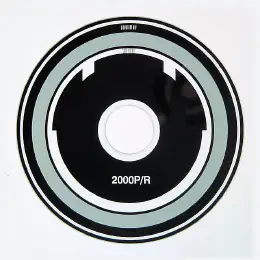
| Dimensions, line count, tracks | To your drawing — example in production: 2000 P/R |
| Contour machining | Laser OD cutting · laser bore machining |
| Inspection | 100% AOI machine vision; vision measuring machine; optical density / reflectance testing |
| Capacity | About 30,000 discs per day (all product lines combined) |
What we can customize
- Outer diameter, bore and thickness to drawing
- Line count, track layout and index position
- Absolute and sin/cos track patterns
- Centering reference ring and alignment marks for assembly
Ordering information
| Quotation | Engineer reviews your drawing for manufacturability, then quotes with sample and production lead times |
|---|---|
| Minimum order quantity (MOQ) | 100 pcs |
| Standard lead time | 5–7 days (confirmed in the quotation) |
| Certifications | ISO 9001 (since 2012) · ISO 14001 |
| Manufacturer | ENC7 — Langfang Jingzheng Optoelectronic Technology Co., Ltd., factory-direct since 2007 |
Typical applications
Why chrome on glass
Photolithography on chrome-coated glass produces cleaner line edges, more uniform pitch and higher light/dark contrast than scribing or printed film. Those three properties drive signal quality: sharper edges give a waveform closer to an ideal sine for interpolation, and uniform pitch keeps graduation error low around the revolution. Glass also stays flat and dimensionally stable — typical expansion is about 3.3×10⁻⁶/K for borosilicate and about 9×10⁻⁶/K for soda-lime glass, versus about 16–17×10⁻⁶/K for stainless steel (typical literature values).
What to send for a quotation
Outer diameter, bore and thickness; line count (or bit count for absolute); track layout and index position; reading radius; readhead model or wavelength; quantity and target date — ideally as a CAD drawing. Full list: RFQ checklist.
Questions? Email sales@enc7.com, call +86 316 893 3331 or request a quote.
Glass vs. reflective metal vs. PC encoder discs
| Criterion | Glass (chrome on glass) | Reflective metal | PC (polycarbonate) |
|---|---|---|---|
| Typical optical path | Transmissive | Reflective (source and detector on the same side) | Transmissive |
| High line counts / absolute multi-track | Easiest | Possible, limited by etching and coating | Moderate resolution |
| Thermal expansion (approx.) | Low — about 3.3 (borosilicate) to 9 (soda-lime) ×10⁻⁶/K | Higher — stainless steel about 16–17 ×10⁻⁶/K | Highest — about 65–70 ×10⁻⁶/K |
| Shock and vibration | Sensitive to drops and impact | Very good — does not shatter | Good — tough, not brittle |
| Encoder height | Needs space on both sides | Can be very thin | Needs space on both sides |
| Relative cost | Higher | Lower than glass | Lowest |
| Best for | CNC, rotary tables, metrology, high-resolution servo | Robot joints, slim servo motors, hollow-shaft encoders | High-volume, cost- and weight-sensitive encoders |
Full comparison: Reflective metal or glass encoder disc? How to choose
Quality control on every disc
- 100% AOI — automated optical inspection of graduation integrity, pitch and surface defects (scratches, spots, chips).
- Vision measuring machine — critical dimensions such as outer diameter, bore and pattern-to-bore concentricity are verified.
- Optical density testing — transparent and opaque areas are measured on transmissive discs.
- ISO 9001 quality management system, certified since 2012; ISO 14001 environmental management system.
- MOQ 100 pcs, standard lead time 5–7 days.
Frequently asked questions
Why is chrome used for the lines on a glass encoder disc?
How is a chrome-on-glass encoder disc made?
Chrome on glass or reflective metal — which should I choose?
What are the MOQ and lead time?
Downloads
- Chrome-on-Glass Encoder Disc datasheet (PDF) · available on request: sales@enc7.com
- RFQ checklist: 20 parameters to send with your drawing
Last updated 21 October 2026 · ENC7 Engineering Team